
A motorcycle MOT checks lamps, steering, brakes, wheels and tyres, suspension, the frame and its attachments, the horn and exhaust noise, and the registration plate and VIN. In Great Britain most motorcycles need their first MOT by the third anniversary of registration, and the maximum fee is £29.65 (£37.80 with a sidecar). A few minutes of checks before the test can avoid a fail for a simple fault.
What the motorcycle MOT inspects
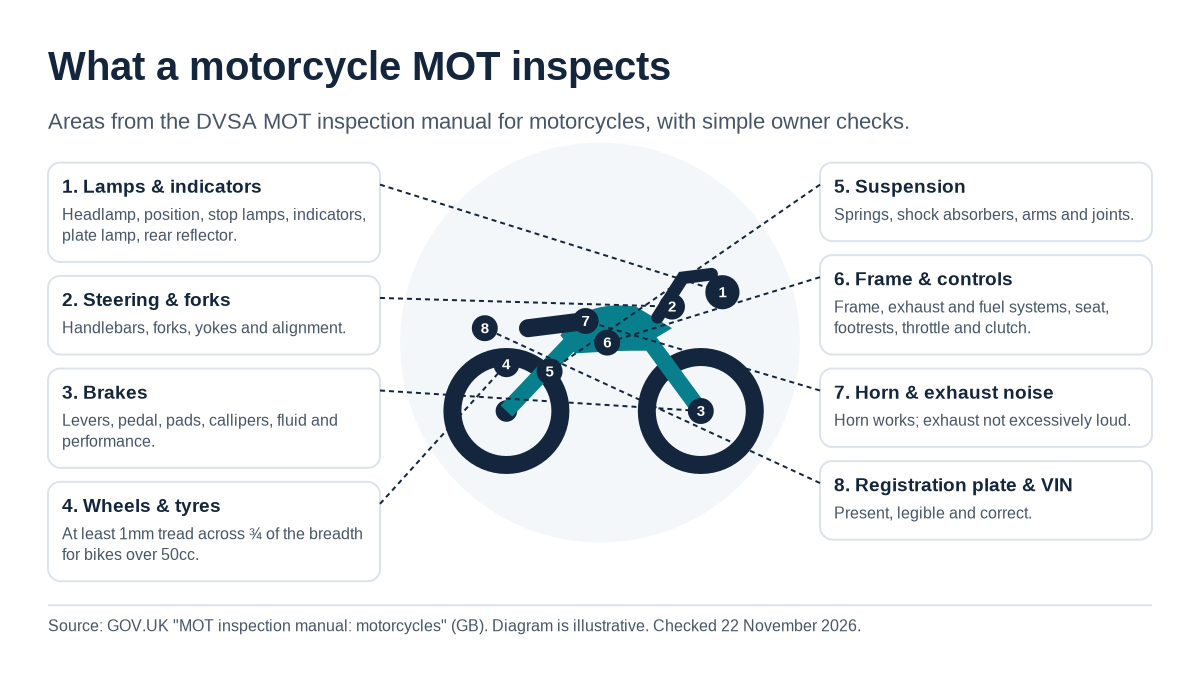
The DVSA inspection manual for motorcycles is organised into sections. The diagram below shows where each area sits on a typical bike.

| Section | What is checked |
|---|---|
| Identification | Registration plate and vehicle identification number |
| Brakes | Levers and pedal, linings and pads, callipers and cylinders, fluid, performance and efficiency |
| Steering | Handlebars, forks and yokes, mechanical condition and wheel alignment |
| Lamps and electrics | Headlamp, position lamps, stop lamps, indicators and tell-tales, rear plate lamp, rear reflector |
| Wheels, tyres, suspension | Wheel bearings, wheels and tyres, springs, shock absorbers, arms and joints |
| Structure and attachments | Frame, exhaust and fuel systems, seat and riding controls including clutch, throttle and footrests |
| Audible warning | Horn |
| Exhaust noise | Exhaust is not excessively noisy |
Pre-MOT checks for riders
Lights
- Check the headlamp on dipped and main beam, the position lamp, the rear lamp and the number plate lamp.
- Check the stop lamp works from both the front brake lever and the rear brake pedal.
- Check all four indicators and the indicator tell-tale.
Tyres and wheels
- For motorcycles over 50cc, the MOT manual requires at least 1mm of tread across three-quarters of the breadth of the tread, around the whole tyre. Mopeds of 50cc or less need a visible tread pattern.
- Look for cuts, bulges and damage to the sidewalls.
- Spin each wheel to check for buckling and rough bearings.
See our tyres guide for more detail.
Brakes
- Squeeze the front lever and press the rear pedal: they should feel firm, not spongy.
- Look at pad wear through the calliper where you can.
- Check the brake fluid level in the reservoir.
Our brake checks guide explains what testers look for.
Steering and suspension
- With the front wheel off the ground (if you can do this safely), turn the bars lock to lock and feel for notchiness.
- Look for oil on the fork legs, which may indicate leaking seals.
- Bounce the rear suspension and check it settles quickly.
Controls, horn and exhaust
- Check the throttle snaps shut when released and the clutch lever works smoothly.
- Make sure the footrests are secure.
- Test the horn.
- Check the exhaust is secure and not blowing. An aftermarket exhaust that is excessively loud can fail.
Only lift or work on a motorcycle if you can do so safely. Brake, steering and suspension repairs should be done by someone competent.
Costs and timing
The GB maximum MOT fee for a motorcycle is £29.65, or £37.80 with a sidecar. In Northern Ireland, DVA's fee for a motorcycle full test is £34.00, and motorcycles are generally first tested at four years old. Our MOT cost guide and first MOT guide have the details.
Check your bike's MOT status
Use the motorbike MOT checker to see the current expiry date, previous tests and any advisories recorded for your motorcycle, scooter or moped.
Questions people also ask
Do mopeds need an MOT?
Mopeds and scooters registered for road use generally need an MOT from three years old in Great Britain, like other motorcycles. Mopeds have a lower tread requirement: a visible tread pattern rather than 1mm.
Can I ride my motorbike to the MOT test if it has expired?
Yes, if the test is pre-arranged and the bike is roadworthy, taxed and insured. That is one of the two exceptions GOV.UK allows.
Sources
Facts in this guide were checked against these official pages on the dates shown. Rules can change; follow the links for the latest version.
- MOT inspection manual: motorcycles (GOV.UK) — reviewed 22 November 2026
- MOT costs (GOV.UK) — reviewed 22 November 2026
- Check your vehicle is safe to drive (GOV.UK) — reviewed 22 November 2026
- How the MOT scheme works (nidirect) — reviewed 22 November 2026